

Prefer to listen? Hear this article on Spotify.
Most of us are told to find a mentor. One person we admire, one person whose advice we trust, one person whose example we should follow.
I’ve never particularly liked the idea of handing one person that much influence. People are complicated, and success in one part of life doesn’t make someone an authority on everything else.
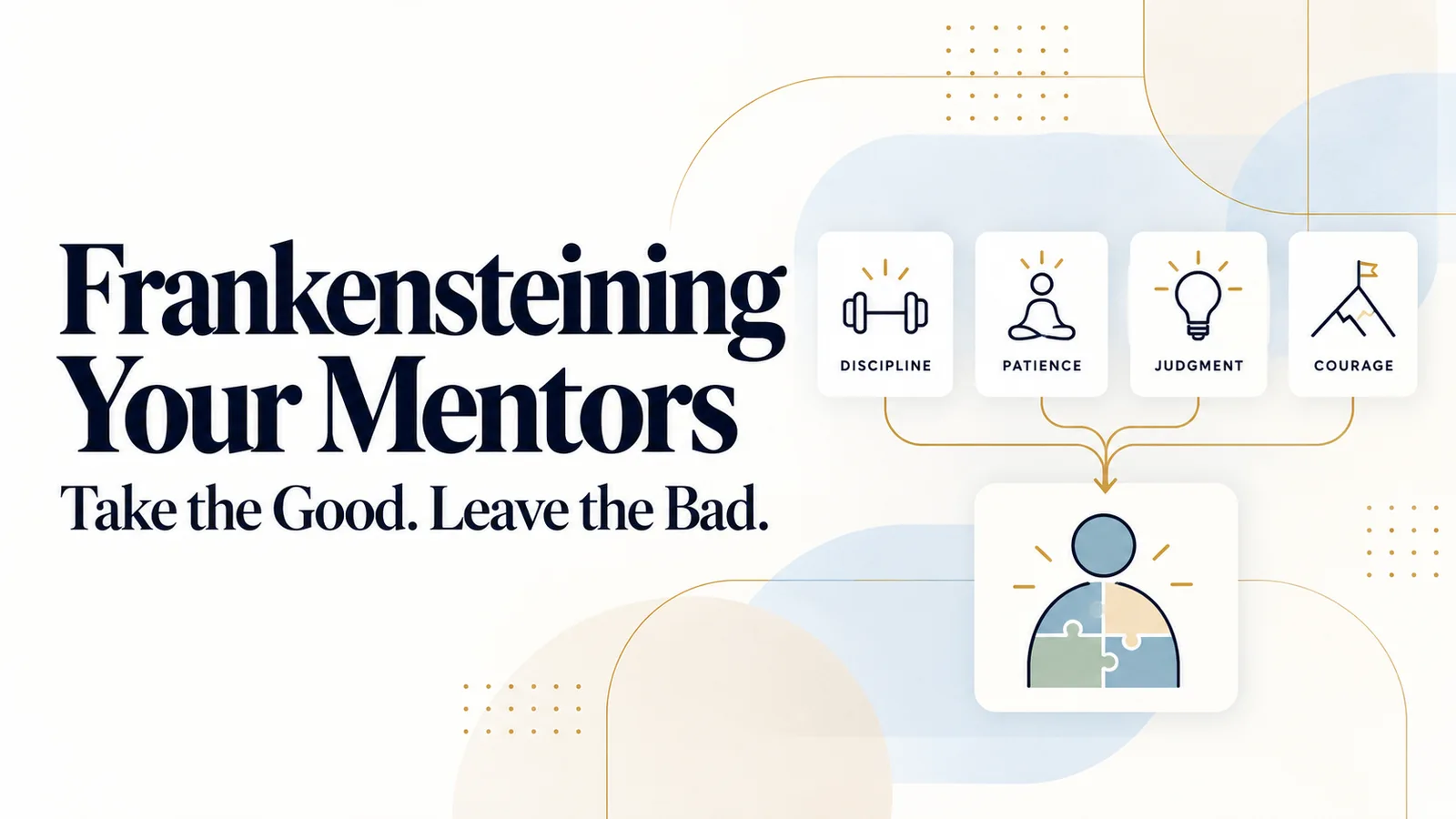
So, in honour of Halloween, here’s a slightly strange suggestion: Frankenstein your mentors.
I’m not recommending a trip to the graveyard. I’m suggesting we borrow the best parts of different people and deliberately assemble the qualities we want to develop in ourselves.
The Problem With Having Heroes
We have a habit of treating people as complete packages. We find a successful business owner, an inspiring leader, a great athlete, or a thoughtful teacher, and begin to admire the person rather than the particular qualities that impressed us.
Then something uncomfortable happens. We discover they were a terrible spouse, made a dishonest decision, treated employees poorly, or held a view we strongly disagree with.
Sometimes our reaction is to throw the whole person away. Everything they ever taught us suddenly becomes suspect, as though one failure somehow proves they never had anything useful to offer.
The opposite reaction can be just as dangerous. We become so attached to our hero that we start explaining away their failures. We rename arrogance as confidence, cruelty as toughness, and obsession as dedication because we don’t want to reconsider someone we admire.
Neither response requires much judgment. One rejects the whole person; the other defends the whole person. Both avoid the more difficult work of deciding which specific lessons are worth keeping.
People Are Not Values
I think it’s better to admire characteristics than people.
Maybe you know a business owner who is incredibly disciplined. They keep commitments, arrive prepared, follow up when they say they will, and do the unglamorous work that most people avoid. That’s worth learning from.
But perhaps that same person has a short temper and leaves a trail of frustrated employees behind them. You can learn their discipline without adopting their temper. In fact, their weakness might teach you something about how to apply that discipline without making everyone around you miserable.
Another person might be exceptionally patient with inexperienced employees but struggle to make difficult decisions. Someone else might make bold decisions quickly, yet take risks they don’t fully understand.
Why would I want to become any one of those people? I’d rather learn patience from one, decisiveness from another, and sound risk assessment from a third.
That’s the idea behind Frankensteining your mentors. Take the good. Leave the bad. Then do the work of making those borrowed qualities your own.
A Good Road Can Still Have Potholes
There’s a difference between recognizing someone’s shortcomings and letting those shortcomings erase everything else about them.
Imagine getting directions from someone who knows an excellent route through an unfamiliar city. Halfway through, you discover the road has potholes. Do you turn around and pretend the entire route was worthless? Or do you acknowledge the hazards, steer around them, and keep what was useful about the directions?
People can be like that. A mentor may show you a good way to solve a problem while also showing you behaviours you never want to repeat.
Of course, some flaws are far more serious than potholes. Dishonesty, exploitation, and abuse are not charming imperfections. They can undermine the lesson itself, especially when someone’s apparent success was achieved through the very behaviour you’re being asked to overlook.
If a leader builds a profitable company by cheating customers, you shouldn’t study the cheating as though it were clever strategy. You should question whether the apparent success is worth calling success at all.
And you don’t owe anyone your admiration, forgiveness, access to your life, or a public defence of their reputation just because they happen to possess one useful skill.
Understanding someone’s strengths doesn’t require blindness to their faults. Sometimes the best lesson a person can give you is an example of what not to become.
Don’t Just Copy the Costume
There’s another problem with heroes. We often imitate the easiest parts of them to see.
We copy how someone dresses, talks, runs meetings, or projects confidence. We repeat their favourite phrases and adopt their opinions. It gives us the feeling that we’re becoming more like them without requiring us to develop the qualities that actually made them effective.
It’s a little like putting on a costume for Halloween. You might look the part, but you haven’t acquired the skills underneath it.
A confident business owner may appear decisive because they’ve spent years learning their industry and can recognize patterns quickly. Copying their certainty without building the same competence is not leadership. It’s just being confidently wrong.
Likewise, you can admire someone’s work ethic without copying an unhealthy schedule, or learn from a demanding manager without deciding that disrespect is a prerequisite for high standards.
Study the behaviour that produces the result, the sacrifices that come with it, and the effects it has on other people. Then decide whether it’s a trade you’re actually willing to make.
Build Your Own Version
Here’s an exercise I find useful. Before choosing the people you want to emulate, define the characteristics you want to possess.
Perhaps it’s patience, courage, curiosity, discipline, honesty, sound judgment, or the ability to stay calm when things go wrong. Whatever your list looks like, make the words specific enough that you can recognize the behaviour in real life.
Then think about the people you’ve met, worked with, read about, or learned from. Who demonstrates each quality particularly well? What do they actually do that proves it?
For example, “be more disciplined like Alex” is vague. “Prepare tomorrow’s three priorities before leaving the office, as Alex does” gives you something to try on Monday morning.
You could write four columns on a page: the person, the behaviour worth borrowing, the behaviour you want to avoid, and one practical action you’ll take. It doesn’t have to become a complicated self-improvement system. You’re simply turning admiration into a deliberate choice.
And keep editing your creation. As you gain experience, you’ll realize some of the things you admired weren’t as useful as you thought. You may also discover strengths in people you initially dismissed.
You’re not trying to assemble a perfect human being. You’re learning to make better judgments about who you want to be.
Be Your Own Creation
The danger of having heroes is that we can hand over the responsibility for deciding what is right, admirable, or effective. If they do it, we assume we should do it too.
I’d rather start with my own values and use them as the measuring stick. Other people can provide examples, methods, cautionary tales, and inspiration, but they shouldn’t get to decide which parts of their personality I inherit.
We don’t need perfect people to learn good lessons. We need enough judgment to separate a useful quality from the person carrying it, and enough discipline to actually develop that quality ourselves.
This Halloween, go ahead and Frankenstein your mentors. Just remember that you’re the one who has to live with the creature you build.